
Call us now :08071630377
 Send Inquiry
 Send Inquiry
Globe Valve
MOQ : 70 Pieces
Globe Valve Specification
- Connection
- Flanged / Screwed / Socket Welded
- Sealing
- Soft / Metal Seated
- Material
- Stainless Steel / Cast Iron / Brass
- Power
- Manual
- Pressure
- Class 150 to 2500
- Media
- Water, Oil, Gas, Steam
- Working Temperature
- -29C to 425C
- Port Size
- 1/2 inch to 12 inch
- Surface
- Polished
- Shape
- Round
- Application
- Industrial, Chemical, Water Supply
- Color
- Silver
- End Connection
- BSP / NPT / RF / RTJ
- Bonnet Type
- Bolted / Welded
- Packing
- Graphite / PTFE
- Leakage Class
- Class VI
- Disc Type
- Plug / Ball / Parabolic
- Stem Material
- Stainless Steel
- Weight
- 2 kg to 120 kg
- Design Standard
- BS 1873 / API 602 / DIN 3356
- Size Range
- DN15 to DN300
- Handle Type
- Wheel Type
- Face to Face Dimension
- As per ASME B16.10
- Testing Standard
- API 598
- Body Material
- Forged Steel / Cast Steel
- Operation
- Handwheel
Globe Valve Trade Information
- Minimum Order Quantity
- 70 Pieces
- Payment Terms
- Cash in Advance (CID)
- Delivery Time
- Week
- Sample Available
- Yes
- Sample Policy
- Within a certain price range free samples are available
- Packaging Details
- Wooden Boxes.
- Certifications
- ISO9001:2000, API6D
About Globe Valve
With utmost support from our talented employees, we are one of the leading companies engaged in business of manufacturing and supplying Globe Valve. This valve is used for throttling flow control. It has a spherical body shape with two halves being separated by an internal baffle. This valve is typically used in cooling water systems, fuel oil systems, boiler vents & drains, and turbine seals and drains. Globe Valve is best suited for working environments including highly corrosive and highly viscous fluid.
Features:
-
Has smooth stem
-
Useful for frequent cycling and control of fluid
-
Outside screw and yoke
Durable Construction and Versatility
Choose from forged or cast steel body options along with strong stainless steel stems. The valves compatibility with multiple disc types and bonnet designs makes it suitable for demanding industrial, chemical, and water supply applications, delivering reliable sealing and corrosion resistance in challenging environments.
Certified to International Standards
Each globe valve meets rigorous standards like BS 1873, API 602, and DIN 3356, with factory testing as per API 598. Face-to-face dimensions align with ASME B16.10, ensuring seamless integration into existing pipelines for system safety and structured operation.
Flexible Operation and Reliable Sealing
Operation is streamlined through a manual handwheel with a robust wheel-type handle. The valve provides secure sealing via soft or metal seatssupported by graphite or PTFE packingto ensure leak-tight service for water, oil, gas, and steam at temperatures up to 425C and pressures to Class 2500.
FAQs of Globe Valve:
Q: How does the globe valve achieve precise flow regulation in industrial applications?
A: The globe valve utilizes a plug, ball, or parabolic disc in conjunction with a stainless steel stem, allowing operators to finely adjust flow rates. Its manual handwheel enables gradual and controlled movement of the disc against the seat, ensuring accurate regulation of media such as water, oil, gas, or steam.Q: What are the recommended scenarios for using this globe valve?
A: This valve is ideal for industrial, chemical, and water supply systems where reliable flow control is critical. It excels under high-pressure and high-temperature conditions (Class 1502500, -29C to 425C), and its versatile sealing options make it suitable for a wide variety of fluids and gas applications.Q: When should I select a bolted bonnet versus a welded bonnet for my application?
A: A bolted bonnet is typically chosen for applications where routine maintenance or inspections are required, as it allows easier disassembly. Welded bonnets are preferred for high-pressure or hazardous services, where minimizing potential leak paths is essential.Q: Where is this globe valve manufactured and supplied from?
A: This valve is manufactured, supplied, and exported from India by a reputable exporter specializing in industrial valve solutions, ensuring compliance with international quality standards and reliable worldwide delivery.Q: What testing standards are followed to ensure the valves performance and safety?
A: The globe valve undergoes thorough leak and pressure testing according to API 598 requirements. Its face-to-face dimensions adhere to ASME B16.10, while the general design complies with standards such as BS 1873, API 602, or DIN 3356 for guaranteed safety and durability.Q: How do I connect this globe valve to my piping system?
A: The valve offers a variety of end connectionsincluding BSP, NPT, RF, RTJ, flanged, screwed, and socket weldedallowing straightforward integration into new or existing pipeline systems using the appropriate connection method for your application.Q: What are the benefits of choosing a valve with a Class VI leakage rating?
A: A Class VI leakage rating signifies near-bubble-tight sealing, which minimizes media loss and ensures dependable isolation. This enhances system efficiency, safety, and reduces maintenance requirements, making it especially advantageous for critical industrial operations.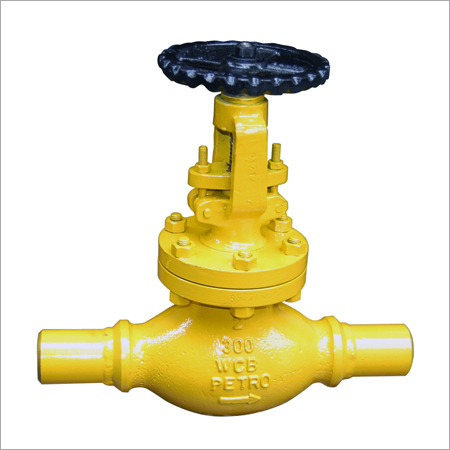
Tell us about your requirement

Price:
Quantity
Select Unit
- 50
- 100
- 200
- 250
- 500
- 1000+
Additional detail
Mobile number
Email


 Send Inquiry
Our Products

Corporate Office & Unit-Ii:-Survey No.1144, Opp. Gharda Ghar, Indore Highway, Kuha, Ahmedabad - 382433, Gujarat, India

 Send Inquiry
 Send SMS
Developed and Managed by Infocom Network Private Limited.
